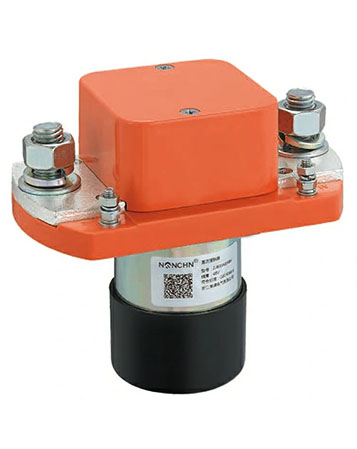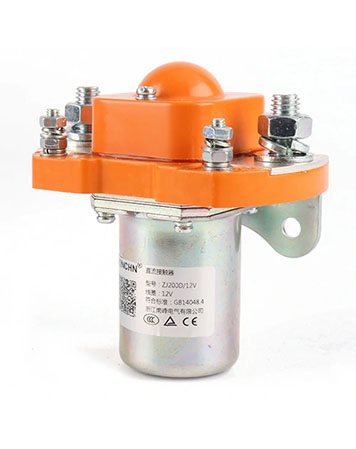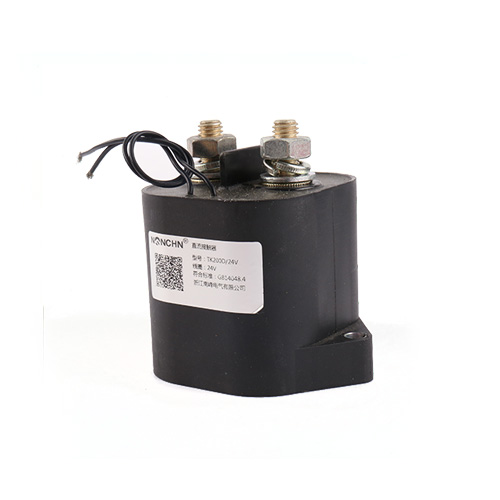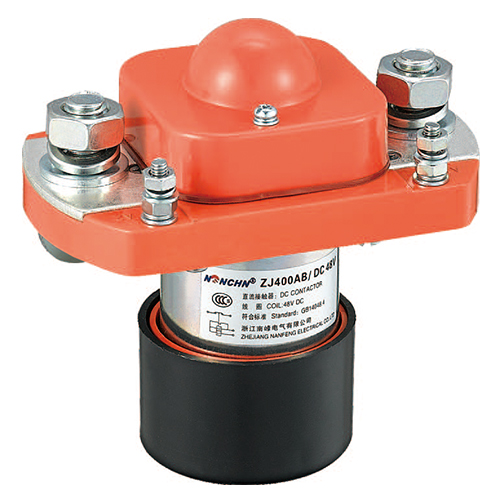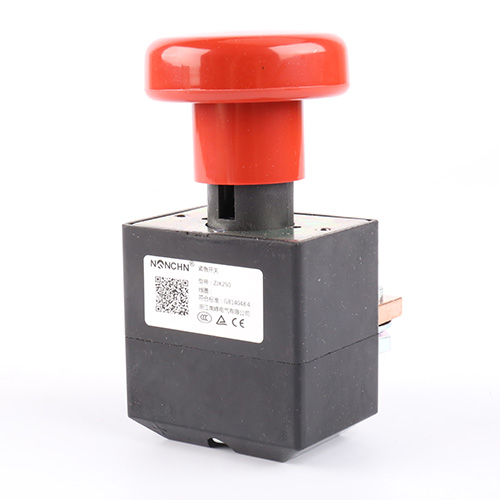

You're sizing a contactor for a motor or battery circuit, and the inrush current spec catches your eye. A DC Contactor rated for 100A continuous might see 700A for a fraction of a second during startup. Does it survive? The ZJW100-33 was engineered with an instantaneous current rating of 7Ie (seven times rated current) for up to one second—handling the inrush that motors, capacitors, and inductive loads produce. This article explains what that rating means in practice, how the contactor manages inrush without damage, and what other specifications matter when specifying for high-inrush applications.
Key Specs Buyers Ask First
Dual Ratings and Coil Voltage
Q: What are the actual load ratings for this contactor?
A: The ZJW100-33 is rated for 100A at DC 80V and 30A at AC 380V. The AC rating also covers 220V and 110V loads. This dual capability means the same contactor can switch DC battery circuits and AC auxiliary loads without requiring separate devices.
Q: What coil voltage options are available?
A: The coil is available in voltage specifications from 6V to 220V DC. This wide range covers standard 12V and 24V systems, as well as higher-voltage industrial control circuits. The standard ordering configuration is ZJW100-33S/12V with a DC12V coil, but other voltages are available on request.
Contact Setup and Cycle Life
Q: How are the contacts configured?
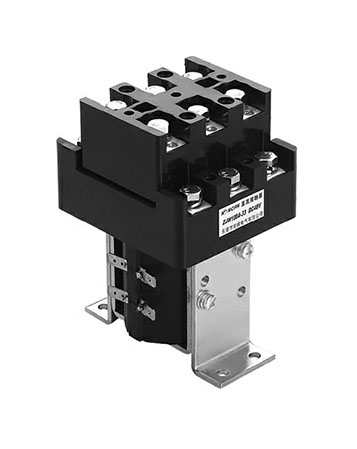
A: The contactor uses three groups of bridge-type contacts—normally open and normally closed. This configuration supports both power switching and control interlocking in a single device. The mechanical life is rated at ≥300,000 cycles, and the electrical life is ≥20,000 cycles.
Q: What is the contact voltage drop?
A: The contact voltage drop is ≤80mV at 100A. This low drop minimizes energy loss and heat generation, which is critical for high-current DC applications where every millivolt of loss translates to wasted power.
Why Dual Ratings Simplify Panel Design
Most contactors are specified for one load type. DC contactors handle battery and rectifier circuits. AC contactors handle mains-powered equipment. But real power systems don't always divide that cleanly. A telecommunications base station might use a DC battery bank for backup power and AC mains for primary supply—both routed through the same control panel. An electric vehicle uses DC for traction and AC for auxiliary systems. The ZJW100-33's dual rating means one contactor covers both. That simplifies panel design, reduces component count, and eliminates the wiring between separate DC and AC contactors. For system integrators, fewer components means fewer failure points and lower assembly cost.
What the DC Rating Covers
At 100A and DC 80V, the contactor handles the high-current DC circuits typical of battery systems, rectifier outputs, and DC distribution. The inverse-parallel contact design and magnetic arc suppression manage the DC arc that forms when the contactor opens under load. DC arcs don't self-extinguish at zero crossings, so the contactor's arc control is essential for reliable switching.
What the AC Rating Enables
The 30A at AC 380V rating opens applications that pure DC contactors can't serve. Auxiliary AC circuits, control transformers, and small AC motors can all be switched through the same contactor. For systems that need both DC and AC switching in one panel, this eliminates the need for a second device.
ZJW100-33 Specs at a Glance
| Parameter | Specification |
|---|---|
| Model | ZJW100-33 |
| Contact Configuration | Three groups bridge type, NO + NC |
| Rated Voltage (DC) | DC 80V |
| Rated Voltage (AC) | AC 380V / 220V / 110V |
| Rated Current (DC) | 100A |
| Rated Current (AC) | 30A |
| Coil Voltage Range | DC 6–220V |
| Coil Power Consumption | ≤23W |
| Instantaneous Max Current | 7Ie, ≤1s |
| Contact Voltage Drop | ≤80mV at 100A |
| Insulation Resistance | ≥100 MΩ |
| Dielectric Withstand | 2500V, 1min |
| Mechanical Life | ≥300,000 cycles |
| Electrical Life | ≥20,000 cycles |
| Operating Temperature | -25°C to +55°C |
| Mounting | Vertical |
Applications That Need Both AC and DC
The ZJW100-33 serves applications where both DC and AC switching occur in the same system:
Telecom Base Stations and EPS
Telecommunications base stations rely on EPS (emergency power supply) systems to maintain operation during grid outages. The ZJW100-33 switches the DC battery circuit and the AC backup supply, providing a single point of control for both. The wide coil voltage range (6-220V DC) allows compatibility with standard 12V and 24V telecom control systems.
EVs and Battery Equipment
Electric vehicles, forklifts, and battery-powered mining equipment use DC contactors for traction battery switching. The ZJW100-33's 100A DC rating and 300,000-cycle mechanical life make it suitable for these high-cycle applications. The AC rating also covers auxiliary circuits, simplifying the electrical architecture.
UPS and DC Systems
Uninterruptible power supplies and DC power distribution systems benefit from the contactor's dual rating. The ≤80mV contact voltage drop at full load minimizes power loss, and the 2500V dielectric withstand ensures safe isolation between control and load circuits.
Industrial Control Panels
Control panels that mix DC control circuits with AC load switching can use the ZJW100-33 for both functions. The three normally open plus normally closed contact configuration provides flexibility for interlocking and status feedback without additional auxiliary contactors.
Common Questions From Integrators
Q: Can It Run on DC Only?
A: Yes. The DC rating is 100A at 80V DC, and the contactor performs optimally in DC-only applications. The AC rating is an additional capability, not a requirement.
Q: What Does the 7Ie Rating Mean?
A: The contactor can withstand an instantaneous current of 7 times the rated current (7 × 100A = 700A) for up to 1 second without damage. This covers inrush currents from motor starts or capacitive loads.
Q: How Is the Coil Controlled?
A: The contactor uses a DC coil powered by the system control voltage. The coil voltage specification is selected at order time—for example, ZJW100-33S/12V for a 12V DC coil. Coil power consumption is ≤23W.
Q: What Maintenance Is Needed?
A: DC contactors are designed for long service life with minimal maintenance. Periodic inspection of contact surfaces for pitting or erosion is recommended. The mechanical life rating of 300,000 cycles provides a reference for replacement planning.
Request a Contact Configuration
A DC Contactor with dual 100A DC / 30A AC ratings, 6-220V coil voltage range, and three normally open plus normally closed bridge contacts is the practical choice for power systems that switch both DC and AC loads. The ZJW100-33 from Nanfeng Electric delivers 100A at DC 80V and 30A at AC 380V for dual-load capability, DC 6-220V coil voltage range for system compatibility, ≤80mV contact voltage drop at full load, ≥300,000 cycles mechanical life for high-cycle applications, 2500V dielectric withstand for safe isolation, and vertical mounting for standard panel installation.
Whether you're designing telecommunications EPS systems, battery vehicle power circuits, or industrial control panels, this contactor offers the dual-rating flexibility and high-current capability that modern DC power systems demand. With a coil voltage range spanning 6V to 220V DC, it adapts to standard control voltages without additional level shifting.
Contact Nanfeng Electric for a contact configuration assessment → their team can help you select the right coil voltage, contact arrangement, and mounting for your specific DC and AC load requirements. Get a contactor that handles both load types—so your panel stays compact and your component count stays low.