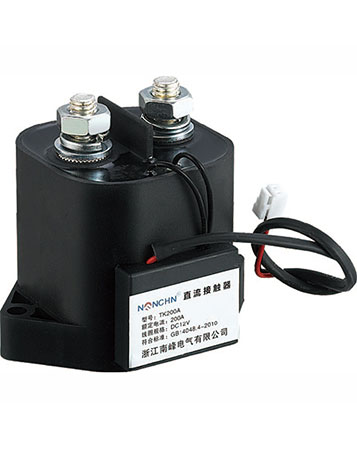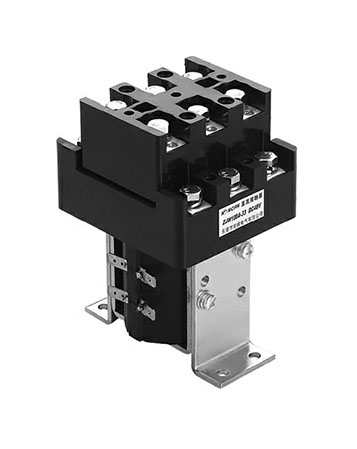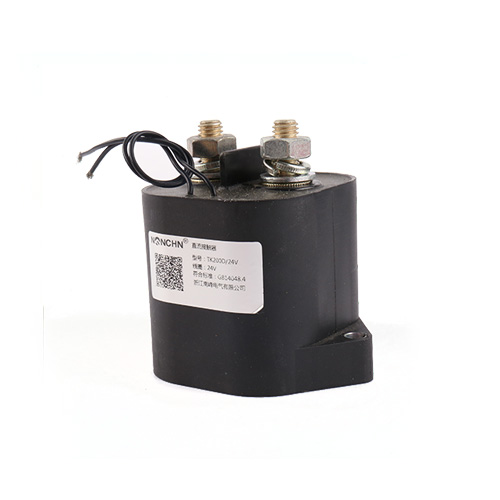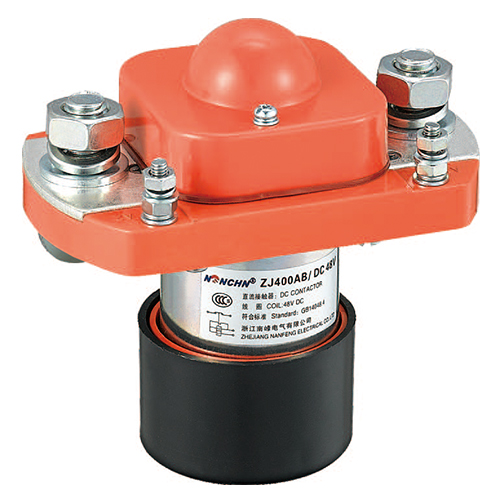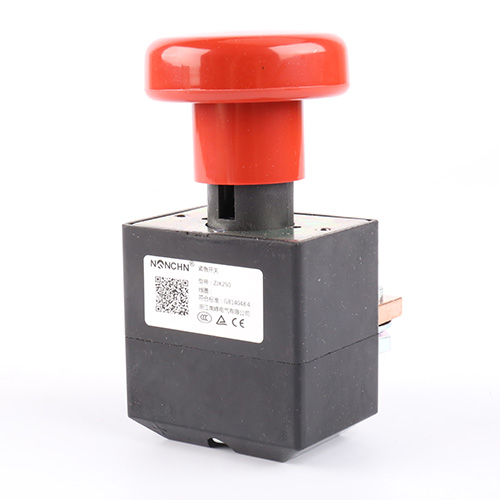

You're specifying a contactor for a battery-powered vehicle, and the load current is high enough that a single contact point would overheat or weld. A DC Contactor that uses a bridge-type contact arrangement splits the current across two contact points, reducing the thermal and arc load on each. The NR200A from Nanfeng Electric is built around this bridge design, with AgCuO(10)/Cu contacts rated for 200A continuous and 800A instantaneous current. This article explains what the bridge configuration delivers, how the contact material affects switching life, and what to verify before specifying a contactor for your DC power system.
What Does a Bridge Contact Configuration Deliver?
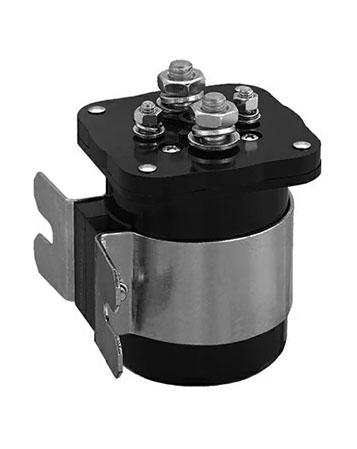
A bridge contact configuration uses two moving contact points that close simultaneously onto two stationary points. This arrangement halves the current carried by each individual contact, which reduces resistive heating and extends contact life. The NR200A uses one pair of bridge-type moving open (NO) contacts. When the coil energizes, both contact points close together, splitting the load current between them. For a 200A load, each contact point carries approximately 100A. This reduces the temperature rise at the contact interface and lowers the risk of welding under inrush conditions.
Current Distribution and Thermal Load
The bridge design distributes the load current across two paths. Each path carries half the total current, so the resistive heating at each contact point is one-quarter of what it would be in a single-contact design. This thermal advantage allows the contactor to handle higher currents in a smaller package and extends the electrical life of the contacts.
Arc Suppression During Switching
When the contactor opens under load, the bridge configuration helps extinguish the arc more quickly. The two contact gaps in series create a longer total arc path, which raises the arc voltage and encourages the arc to extinguish sooner. This is particularly important in DC circuits, where the arc does not self-extinguish at a zero crossing.
How Does the Coil Specification Affect Switching Reliability?
The coil is the interface between the control circuit and the power contacts. The NR200A is available in DC coil voltages of 12V, 15V, 24V, 36V, 48V, and 60V. The pickup voltage is ≤70% of rated voltage (positive power up), and the release voltage is ≥5% and ≤40% of rated voltage. The coil power consumption is ≤9W, and the contactor uses a continuous operating duty coil, meaning it can remain energized indefinitely without overheating. The pickup time is ≤30ms and the release time is ≤50ms, allowing the contactor to respond quickly to control signals.
Coil Voltage Options for Different Battery Systems
The 12V and 24V coils are standard for most battery vehicles and forklifts. The 36V, 48V, and 60V options serve higher-voltage DC systems. The coil resistance varies with voltage—a 12V coil has approximately 20.9Ω, while a 48V coil has approximately 288.3Ω. These specifications allow the contactor to be driven directly from the battery voltage without additional voltage conversion.
Pickup and Release Voltage for Reliable Operation
The pickup voltage of ≤70% ensures that the contactor energizes reliably even when the battery voltage is lower than nominal. The release voltage range of ≥5% to ≤40% provides a clean dropout when the control signal is removed, preventing contact chatter or welding.
What Are the Mechanical and Environmental Ratings?
The NR200A is built for demanding environments. It has a mechanical life of ≥300,000 cycles and an electrical life of ≥20,000 cycles. The contactor is rated for an operating temperature range of -25°C to +55°C, with vibration resistance of 2.5g (5-50Hz) and shock resistance of 50g, 11ms (half sine). The protection degree is IP50, which means it is dust-protected but not water-resistant. The mounting position is arbitrary, and the maximum mounting altitude is 2km.
| Parameter | Specification |
|---|---|
| Contact Type | One pair of bridge type moving open (NO) contacts |
| Rated Voltage of Contacts | ≤80V DC |
| Rated Current | 200A |
| Instantaneous Max Current | 800A, ≤1s |
| Contact Voltage Drop | ≤80mV (at 100A) |
| Contact Material | AgCuO(10)/Cu |
| Coil Voltage Options | 12V, 15V, 24V, 36V, 48V, 60V DC |
| Pickup Voltage | ≤70% Ue |
| Release Voltage | ≥5% Ue; ≤40% Ue |
| Coil Power Consumption | ≤9W |
| Pickup Time | ≤30ms |
| Release Time | ≤50ms |
| Mechanical Life | ≥30 × 10⁴ cycles |
| Electrical Life | ≥2 × 10⁴ cycles |
| Operating Temperature | -25°C to +55°C |
| Protection Degree | IP50 |
| Mounting | Arbitrary |
Mechanical Life and Duty Cycle
The mechanical life of ≥300,000 cycles indicates the number of times the contactor can open and close without load. The electrical life of ≥20,000 cycles accounts for the contact erosion that occurs when the contactor switches under load. For applications that switch frequently, the electrical life determines the replacement interval.
Temperature and Vibration Resistance
The -25°C to +55°C operating range covers the conditions found in battery vehicles, winches, and construction equipment. The vibration and shock ratings ensure the contactor remains reliable even when mounted on mobile equipment that experiences constant motion and impact.
Where Does a 200A Model Deliver the Most Value?
The NR200A serves DC power systems where high current must be switched reliably. The contactor is used in battery vehicles, electric forklifts, electric winches, electric cars, excavators, vehicle air conditioners, and DC power supplies. These applications share a common requirement: the contactor must handle the full load current continuously and survive the inrush current that occurs when motors start.
-
Battery vehicles — main power switching for storage battery cars and electric utility vehicles
-
Electric forklifts — traction battery connection and disconnection
-
Electric winches — high-current motor control in marine and industrial applications
-
Excavators — DC power control in hybrid and electric construction equipment
-
Vehicle air conditioners — DC compressor and blower motor switching
-
DC power supplies — switching for communication power, UPS, and electroplating systems
Battery Vehicles and Electric Forklifts
Electric forklifts and battery vehicles use the NR200A to switch the main battery circuit. The 200A continuous rating handles the traction current, and the 800A inrush rating covers the startup current of the drive motor. The bridge contacts and AgCuO(10)/Cu material resist the arc erosion that occurs during high-current switching.
Winches and Construction Equipment
Electric winches and excavators operate in harsh environments with dust, moisture, and vibration. The NR200A's IP50 protection and wide temperature range ensure reliable operation. The contactor's mechanical and electrical life ratings support the frequent switching these applications require.
Common Questions About High-Current DC Switching
What is the difference between continuous and inrush current ratings?
The continuous rating (200A) is the current the contactor can carry indefinitely without exceeding its temperature limits. The inrush rating (800A for ≤1s) is the maximum current the contactor can carry for a short duration, typically during motor startup. Both ratings must be considered when selecting a contactor for a specific application.
Can this contactor switch AC loads?
The NR200A is designed for DC loads. Switching AC with a DC contactor may result in reduced life or failure because the arc characteristics differ. For AC loads, an AC contactor should be specified.
How do I select the right coil voltage?
Match the coil voltage to the available control voltage in your system. For a 24V battery system, choose a 24V coil. For a 48V system, choose a 48V coil. The pickup voltage of ≤70% ensures reliable operation even when the battery is partially discharged.
What maintenance does the contactor require?
The contactor has no user-serviceable internal components. Routine inspection should verify that the terminal connections are tight (M8 torque ≤8.5 N·m) and that the contactor housing is not damaged. If the contactor fails to pick up or release, or if contact resistance increases beyond specification, it should be replaced.
Request a High-Current Switching Configuration
A DC Contactor with 200A continuous rating, 800A inrush capacity, and AgCuO(10)/Cu bridge contacts is the practical choice for battery vehicles, winches, and DC power systems that require reliable high-current switching. The NR200A from Nanfeng Electric delivers 200A rated current, ≤80V DC contact voltage, 800A ≤1s instantaneous current, AgCuO(10)/Cu contact material, ≤80mV contact drop, and coil voltage options from 12V to 60V DC. Contact Nanfeng Electric for a high-current switching configuration assessment → their team can help you select the right coil voltage and contact configuration for your specific battery voltage and load requirements.