
You're designing a power system for an electric forklift or an industrial winch. The battery delivers high current, the motor demands reliable switching, and a failed component means downtime. A mechanical switch won't last. A standard AC relay won't work. You need something built for DC.
A DC contactor is the answer — a heavy-duty switching device designed specifically for direct current circuits. Unlike AC contactors, DC contactors must handle the challenge of DC arcs, which don't self-extinguish the way AC arcs do. This guide covers what makes DC contactors different, where they're used, and how to choose the right one for your equipment.
Built for the brutality of DC
DC circuits present challenges that AC circuits don't. A DC contactor is engineered to handle those challenges reliably.
Handles the amps and the volts
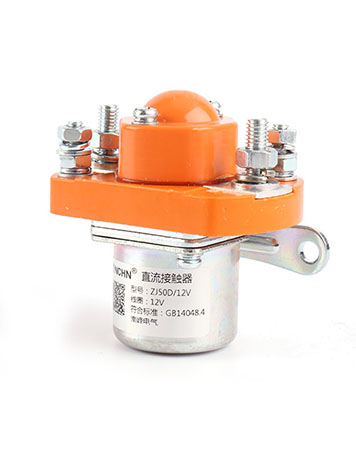
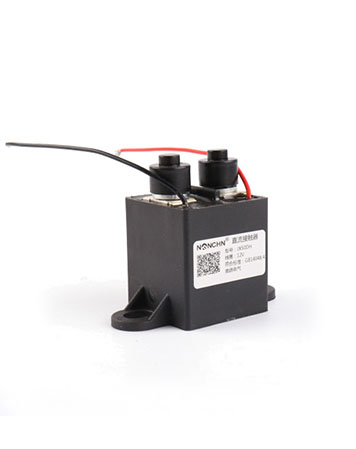
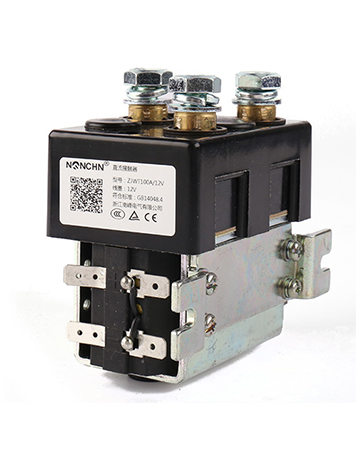
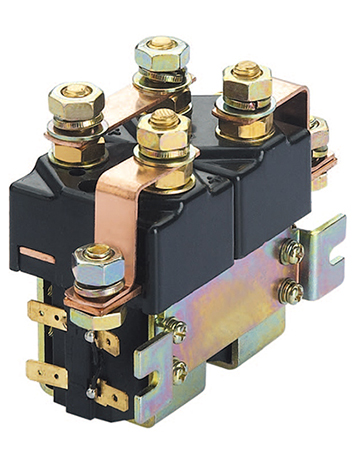
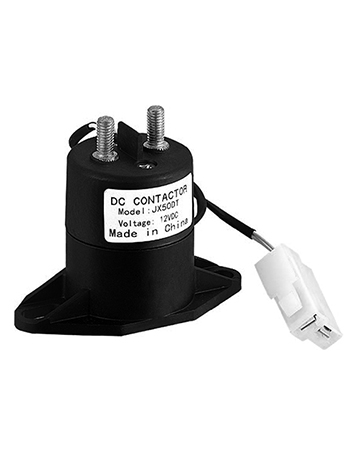
The JX50DT DC contactor is rated for up to 48V DC and 50A continuous current, with the ability to handle higher currents for short periods. This makes it suitable for battery-powered equipment and industrial DC power systems where both voltage and current demands are significant.
DC arcs don't die on their own
When a contact opens under load, an arc forms. In DC circuits, the current never crosses zero, so the arc continues until the contacts are far enough apart to extinguish it. DC contactors use arc chambers, magnetic blowouts, and contact materials designed to stretch and cool the arc, ensuring reliable interruption even under fault conditions.
Tight seal, tough build
The JX50DT features a robust housing and sealed construction to protect against dust, moisture, and vibration. This makes it suitable for use in electric vehicles, industrial machinery, and outdoor equipment where environmental conditions are harsh.
Where you actually need one
DC contactors are found wherever high-current DC loads need to be switched reliably. The list is broad and growing.
Forklifts, EVs, and off-road gear
Electric forklifts, pallet trucks, and light electric vehicles all rely on DC contactors for power control. The JX50DT is commonly used in these applications, switching battery power to traction motors and hydraulic systems.
Winches, hoists, and heavy pulls
Electric winches and hoists draw high current at low voltage. The DC contactor must handle the inrush current of a stalled motor while providing reliable switching under load. The JX50DT handles these conditions with a high current rating and the ability to interrupt DC loads.
Battery banks, solar, and backup systems
Battery banks, solar storage systems, and UPS systems all use DC contactors for power distribution and protection. In these applications, the contactor may switch between charging and discharging modes or isolate the battery in fault conditions.
Below is a quick reference table for the JX50DT series specifications:
| Specification | JX50DT Series |
|---|---|
| Contact rating | 50A continuous, 100A peak |
| Rated voltage | 48V DC |
| Coil voltage options | 12V, 24V, 48V DC |
| Mechanical life | ≥100,000 cycles |
| Electrical life | ≥10,000 cycles at rated load |
| Contact drop | ≤100mV |
| Insulation resistance | ≥100MΩ at 500V DC |
| Dielectric strength | 1000V AC for 1 minute |
Get the coil voltage right — or else
The coil voltage determines how the contactor is controlled. Selecting the wrong voltage leads to unreliable operation or coil failure.
Match the coil to your system — it's not optional
The JX50DT is available with coil voltages of 12V, 24V, and 48V DC. Choose the voltage that matches your control system — typically the same as the battery voltage in vehicle applications. A 12V coil on a 48V system will burn out immediately. A 48V coil on a 12V system won't pull in.
Low draw, longer battery life
The JX50DT coil consumes low power, making it suitable for battery-powered equipment where energy efficiency is important. Low coil consumption preserves battery life while providing reliable switching performance.
Questions that come up on the floor
Q: Contactor vs. relay — what's the real difference?
A: DC contactors are designed for higher current loads — typically 50A and above — with arc chambers and contact materials optimized for DC switching. DC relays handle lower currents and don't have the same arc interruption capability. For motor control and power switching, use a contactor. For signal switching and low-current control, use a relay.
Q: 50A continuous — but what does that actually mean?
A: The contact rating indicates the maximum current the contactor can carry continuously. The JX50DT is rated for 50A continuous and can handle up to 100A for short periods. For inductive loads like motors, the actual current rating may need to be derated.
Q: Mount it right — don't let it rattle loose
A: DC contactors are typically panel-mounted with through-bolts or brackets. Ensure the mounting surface is flat and the contactor is securely fastened. Vibration can loosen connections and affect contact alignment. The JX50DT is designed for industrial environments with robust mounting provisions.
Getting it right before you install
Getting the right DC contactor starts with understanding your application's requirements.
Know your load first
Resistive or inductive? Continuous or intermittent? The load type determines the contactor's current rating and contact material. For motor loads, the inrush current can be several times the steady-state current — so oversizing is essential.
Pick the coil voltage that matches
Match the coil voltage to your control circuit. Common options include 12V, 24V, and 48V. If your system uses a different voltage, confirm availability with the manufacturer.
Heat, dirt, vibration — plan for it
Temperature, humidity, and vibration all affect contactor life. For harsh environments, consider sealed or encapsulated contactors. The JX50DT is designed for industrial use, but verify the environmental ratings for your specific application.
Spec it once, spec it right
The JX50DT DC contactor is designed for high-current DC switching applications in electric vehicles, industrial machinery, and battery systems. Its robust construction, arc suppression features, and reliable operation make it suitable for demanding environments.
Before you commit to a DC contactor, evaluate your load type, current requirements, and environmental conditions. The right contactor ensures reliable power switching and long service life.
Ready to specify DC contactors for your next project? Contact a supplier for a quote or technical consultation on the JX50DT series. Share your load type, voltage, current, and coil requirements — their team can recommend the right DC contactor configuration for your specific application.