
Contactors play a vital role in modern electrical control systems, enabling the safe and efficient switching of electrical loads. However, many users are often confused about the differences between AC contactors and DC contactors, and whether they can be used interchangeably. This article provides a comprehensive comparison to help you understand how they work, where they are used, and how to choose the right contactor for your application.
What Are Contactors?
A contactor is an electrically operated switching device designed to control high-current power circuits using a relatively low control signal. Unlike ordinary relays, contactors are built to withstand frequent switching, high electrical loads, and harsh industrial environments.
Typical contactor components include:
-
Electromagnetic coil
-
Fixed and moving contacts
-
Spring mechanism
-
Arc extinguishing system
-
Insulated housing
Based on the power supply they control, contactors are primarily divided into AC contactors and DC contactors, each optimized for different electrical characteristics and operating conditions.
Can I Use DC for an AC Contactor?
In general, DC power should not be used to operate an AC contactor.
AC contactor coils are designed for alternating current, which naturally crosses zero multiple times per second. These zero-crossing points help reduce heat generation and assist with arc extinction. When DC power is applied to an AC contactor coil, the coil may draw excessive current, leading to overheating, insulation damage, or even coil burnout.
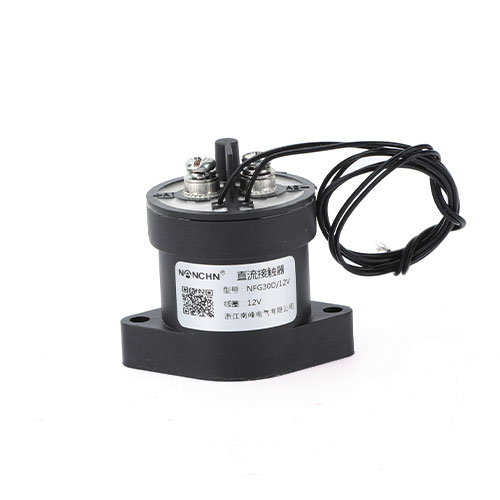
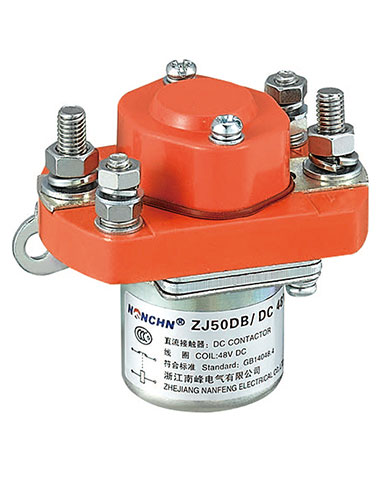
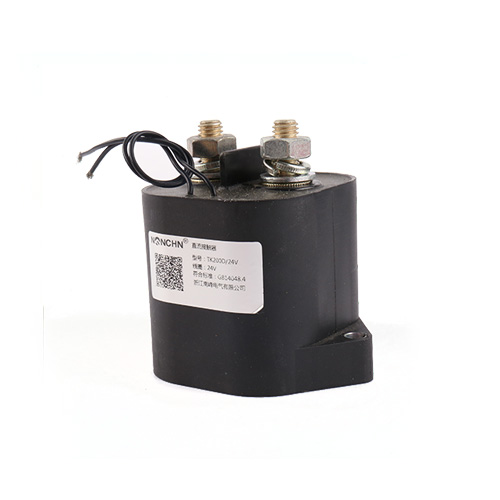
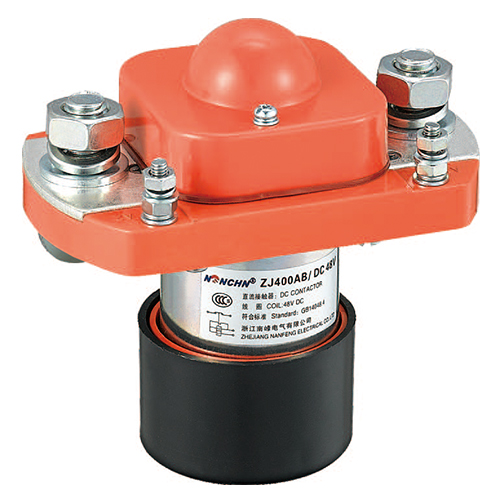
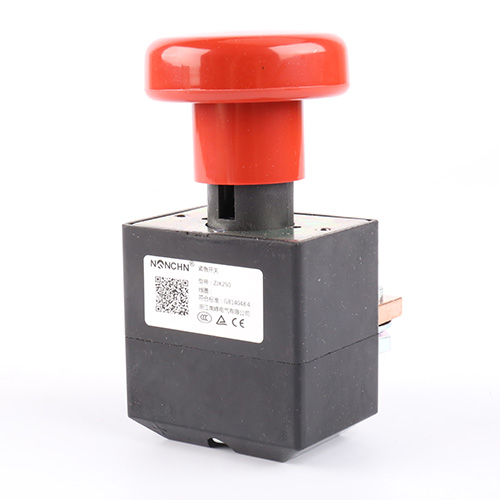
In contrast, DC contactors, such as Nanfeng’s DC contactors, are specifically engineered to handle continuous DC current. They feature optimized coil designs and enhanced arc suppression structures, making them safe and reliable for DC power systems like battery banks and renewable energy installations.
Difference Between AC Contactors and DC Contactors
While both devices perform switching tasks, their technical differences are critical to system safety and performance.
1. Coil and Magnetic Circuit Design
AC contactors use laminated iron cores to minimize eddy current losses and vibration.
DC contactors use solid magnetic cores and stable magnetic fields for continuous current operation.
2. Arc Extinction Capability
AC contactors rely on current zero-crossing to naturally extinguish arcs.
DC contactors must forcibly interrupt arcs, often using magnetic blowout systems or arc chutes. High-quality solutions like Nanfeng DC contactors integrate advanced arc control technology to ensure safe disconnection under high DC loads.
3. Electrical Performance
AC contactors are ideal for sinusoidal AC circuits and inductive loads such as motors.
DC contactors are designed for constant-voltage DC systems where arc duration and contact wear are more severe.
4. Size, Durability, and Cost
DC contactors are generally larger and more robust due to stronger arc suppression requirements.
AC contactors are more compact and cost-efficient for standard AC applications.
Choosing the Right Contactor for Your Needs
Selecting the correct contactor involves more than just voltage matching. Key factors include:
-
Power type: AC or DC
-
Rated voltage and current
-
Load characteristics (resistive, inductive, capacitive)
-
Switching frequency and electrical lifespan
-
Installation environment and safety standards
For DC-heavy applications such as energy storage systems, EV charging, or solar inverters, specialized solutions like Nanfeng’s DC contactors offer improved reliability, longer service life, and enhanced system safety.
Contactor Applications
Contactors are widely used across multiple industries:
AC Contactor Applications
-
Motor starters and motor control centers
-
HVAC systems
-
Industrial machinery
-
Lighting and power distribution panels
DC Contactor Applications
-
Battery energy storage systems (BESS)
-
Electric vehicles and charging stations
-
Solar and wind power systems
-
UPS and DC motor control systems
Conclusion
Although AC and DC contactors share a common purpose, their design principles and application requirements differ substantially. Using the wrong type can lead to overheating, contact damage, or serious safety risks. By understanding these differences and choosing purpose-built solutions—especially in demanding DC environments—you can ensure stable operation, improved efficiency, and long-term system reliability.
FAQ
Q1: Can an AC contactor be used for DC loads?
A: Standard AC contactors are not suitable for DC loads due to poor arc extinction and overheating risks.
Q2: Why are DC contactors typically larger than AC contactors?
A: DC arcs are harder to extinguish, requiring stronger magnetic blowout and arc suppression structures.
Q3: Where are DC contactors most commonly used?
A: DC contactors are widely used in EVs, renewable energy systems, battery storage, and DC power distribution.
Q4: How do I choose a reliable DC contactor supplier?
A: Look for proven arc suppression technology, certified quality standards, and application-specific design experience.