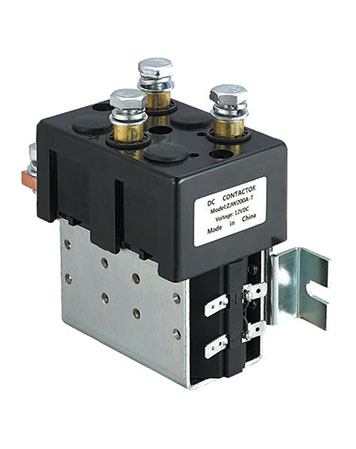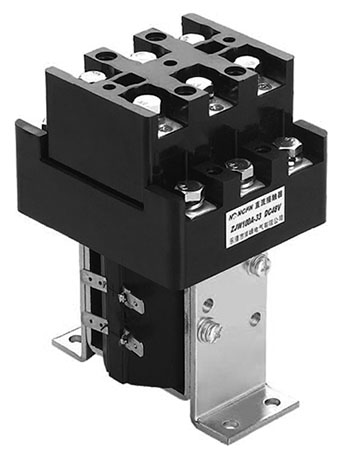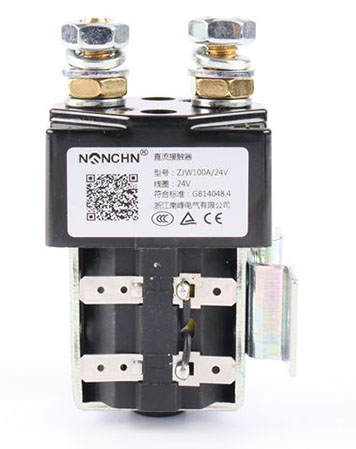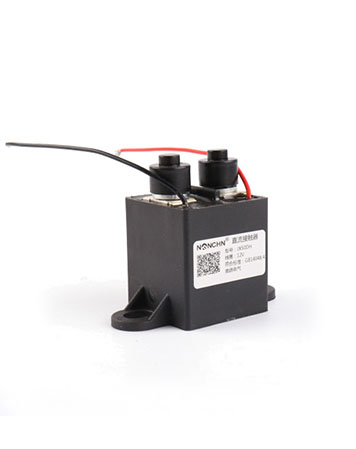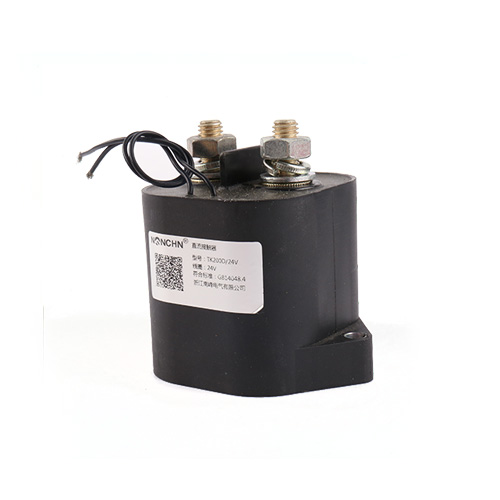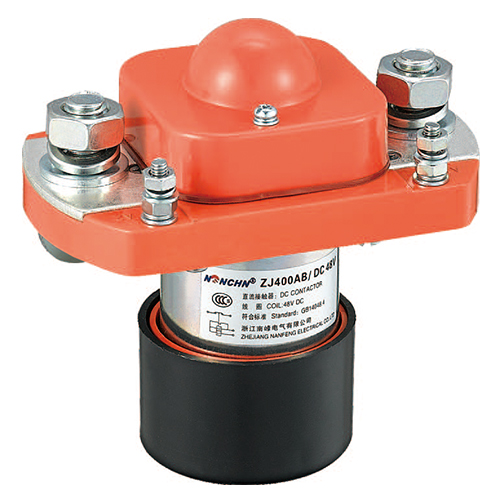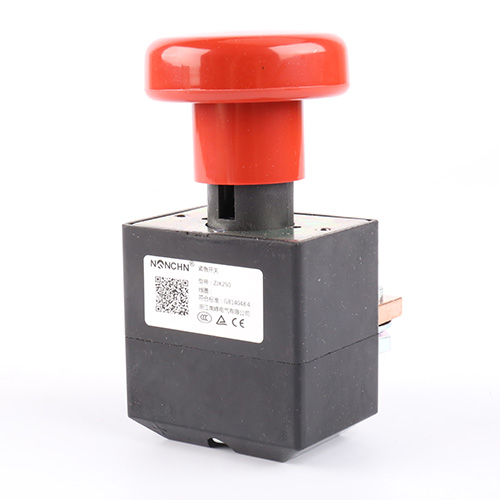

You're designing a power system for an electric vehicle, a forklift, or an industrial machine. You need a reliable way to switch high-current DC circuits on and off—something that can handle hundreds of amps without failing. A DC contactor is the answer. It's an electromagnetic switch that uses a coil to generate a magnetic field, pulling contacts together to complete a circuit. Simple in concept, but the engineering behind it is what makes it reliable in demanding applications. This guide covers the essentials: how they work, where they're used, and what specifications actually matter when selecting one.
How a DC Contactor Works
The principle is straightforward. When current flows through the coil, it creates a magnetic field that attracts the armature, moving the contacts. Normally open contacts close; normally closed contacts open. When the coil is de-energized, a release spring returns the contacts to their default position.
The Role of the Coil
The coil is the heart of the contactor. It's rated for a specific DC voltage—commonly 12V, 24V, 48V, 72V, or 80V. The coil's resistance determines how much current it draws and how much heat it generates. Lower coil power consumption means less heat and longer life.
Contact Configuration
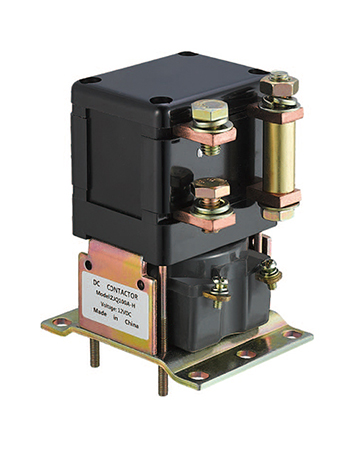
Most DC contactors offer a 1NO + 1NC (one normally open, one normally closed) contact configuration. This allows the contactor to both connect and disconnect circuits in a single device. The ZJQ100H, for example, provides both a set of normally open and normally closed contacts.
Where DC Contactors Are Used
DC contactors are found wherever high-current DC circuits need to be switched reliably. Primary applications include electric vehicles, forklifts, electric winches, excavators, and other DC power systems. They're also used in Variable Frequency Drive, communication power supplies, battery vehicles, traction locomotives, and uninterruptible power supply systems.
Electric Vehicles and Forklifts
In EVs and forklifts, the DC contactor connects and disconnects the battery pack from the motor controller. It must handle high inrush currents and frequent switching without overheating or welding contacts.
Industrial Equipment
Winches, excavators, and other heavy machinery rely on DC contactors for reliable power switching in harsh environments—where vibration, temperature extremes, and dust are everyday realities.
Key Specifications to Check
When selecting a DC contactor, several specifications are critical. The rated voltage determines the maximum circuit voltage the contactor can safely interrupt. The rated current is the continuous current the contacts can carry without overheating. The ZJQ100H is rated for DC80V and 100A.
Contact Voltage Drop
The voltage drop across closed contacts indicates contact resistance. Lower is better. The ZJQ100H specifies a contact voltage drop of ≤80mV, ensuring minimal power loss and heat generation at the contact interface.
Electrical and Mechanical Life
Contactors are rated for a certain number of operations before wear requires replacement. The ZJQ100H offers an electrical life of ≥20,000 operations and a mechanical life of ≥300,000 operations.
Coil Power Consumption
The coil consumes power whenever the contactor is energized. Lower consumption means less heat and better energy efficiency. The ZJQ100H specifies coil DC power consumption of ≤38W.
| Specification | ZJQ100H Value | Why It Matters |
|---|---|---|
| Rated voltage | ≤DC80V | Maximum safe operating voltage |
| Rated current | 100A | Continuous current capacity |
| Contact configuration | 1NO + 1NC | Versatile switching capability |
| Contact voltage drop | ≤80mV | Low power loss, minimal heating |
| Electrical life | ≥20,000 operations | Long-term reliability |
| Mechanical life | ≥300,000 operations | Durability under frequent switching |
| Coil power consumption | ≤38W | Energy efficiency, lower heat |
| Insulation resistance | ≥100MΩ | Safety, prevents leakage |
Materials and Construction
The materials used in a DC contactor directly affect its performance and lifespan. Contact materials must resist welding, arcing, and erosion. The ZJQ100H uses AgCuO(10)/Cu contact material—a silver-copper oxide composite that provides excellent conductivity and arc resistance.
Contact Materials
Silver-based alloys are standard for DC contactor contacts. AgCuO (silver-copper oxide) offers good resistance to contact welding and arc erosion, making it suitable for high-current DC switching.
Coil Wire Insulation
The coil wire insulation must withstand the heat generated during operation. The ZJQ100H uses Class B (130°C) insulation, ensuring reliable operation even at elevated temperatures.
Protection and Mounting
The ZJQ100H offers an IP50 protection rating, providing protection against dust ingress. It can be mounted in any orientation, offering flexibility in installation.
Reliability and Environmental Considerations
DC contactors must perform reliably across a range of environmental conditions. The ZJQ100H is rated for an operating temperature range of -25°C to +55°C, with vibration resistance of 2.5g (5–50Hz) and shock resistance of 50g, 11ms.
Temperature and Thermal Management
The contactor must dissipate heat generated by both the coil and the contacts. The ZJQ100H specifies a terminal temperature rise of ≤65K and a coil temperature rise of ≤85K, ensuring safe operation within thermal limits.
Vibration and Shock Resistance
In mobile applications like EVs and forklifts, vibration and shock are constant. The ZJQ100H's vibration and shock specifications ensure reliable operation even in demanding conditions.
Installation and Maintenance
Proper installation is essential for reliable operation. The ZJQ100H specifies torque limits for its terminals: M6 contacts ≤7.0N·m and M5 coil terminals ≤2.5N·m. Over-torquing can damage the terminals; under-torquing can lead to loose connections and overheating.
Mounting Flexibility
The ZJQ100H can be mounted in any orientation, providing installation flexibility in tight spaces.
Routine Maintenance
Regular inspection and maintenance extend contactor life. Key maintenance tasks include cleaning dust from moving parts and the iron core contact surfaces, checking the iron core for looseness, inspecting the coil insulation and temperature, and cleaning the arc extinguishing chamber.
What Engineers Ask About DC Contactors
What's the difference between a DC contactor and a DC relay?
Both are electromagnetic switches, but contactors are designed for higher currents and more frequent switching. Contactors typically include arc extinguishing chambers to handle the arcing that occurs when interrupting high-current DC circuits.
What does "1NO + 1NC" mean?
It means the contactor has one normally open contact and one normally closed contact. When the coil is energized, the NO contact closes and the NC contact opens, allowing the contactor to both connect and disconnect circuits.
How do I choose the right coil voltage?
Match the coil voltage to your control circuit. Common options are 12V, 24V, 48V, and 72V. Using the wrong voltage can cause the contactor to fail to pull in (too low) or overheat the coil (too high).
What causes contact welding, and how can I prevent it?
Contact welding occurs when the contacts fail to separate due to arcing or excessive current. Using the correct contact material (like AgCuO) and staying within the rated current limits helps prevent welding.
Get the Right DC Contactor for Your Application
Selecting a DC contactor comes down to matching the voltage, current, and environmental requirements of your application. Request a quote or technical consultation → —our team can help you select the right model for your specific needs.
The ZJQ100H DC Contactor is a robust, high-performance switching solution designed for electric vehicles, forklifts, electric winches, excavators, and other DC power systems. It features a 1NO + 1NC contact configuration, rated voltage of ≤DC80V, rated current of 100A, and AgCuO(10)/Cu contact material. With an electrical life of ≥20,000 operations, a mechanical life of ≥300,000 operations, and an operating temperature range of -25°C to +55°C, it's built for demanding industrial and automotive applications. The contactor offers coil voltage options including 12V, 24V, 48V, and 72V, and can be mounted in any orientation. Available with IP50 protection and backed by comprehensive technical documentation.